How to Coordinate Conductors, Insulators and Overhead Line Fittings
Learn which conductor, insulator and mechanical interface data must be matched before selecting suspension, tension, connection and protection fittings.
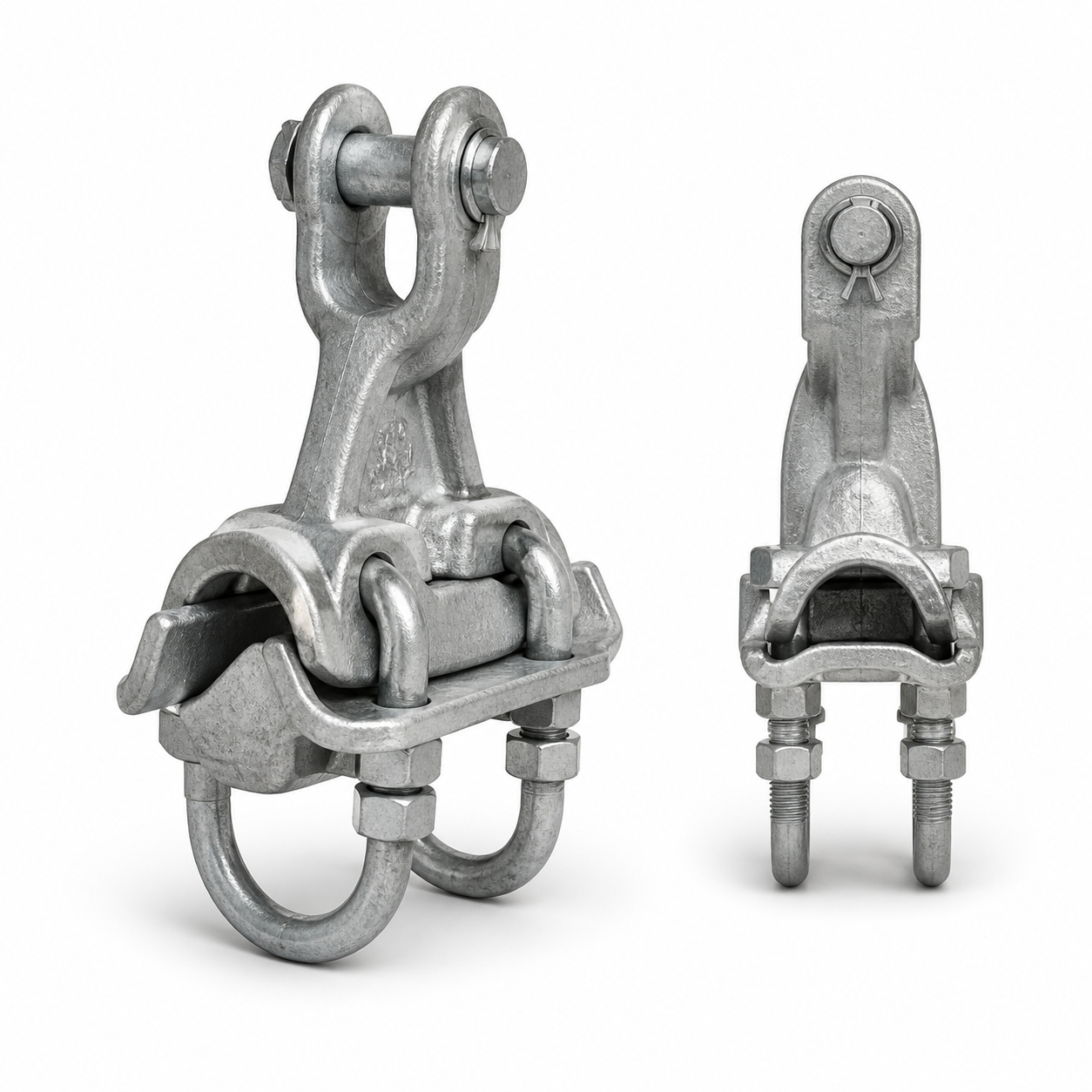
How do you coordinate conductors, insulators and fittings for a transmission line project?
Start with conductor material, construction, diameter, rated tensile strength and operating temperature. Then match the insulator coupling, mechanical class and string geometry. Select suspension, dead-end, joint, repair and vibration-control fittings against those confirmed interfaces and the structure load case.
The conductor data controls more than clamp size
Diameter determines the basic clamp range, but conductor material and construction affect gripping method, electrical compatibility, compression tooling and the use of armour rods or repair systems.
- Confirm AAC, AAAC, ACSR, ACAR or covered conductor construction.
- Provide diameter, strand configuration, rated tensile strength and relevant standard.
- Identify maximum operating temperature and corrosion environment.
Match the insulator string as a mechanical interface
The fitting set must match the insulator coupling, orientation, string length, mechanical load and electrical-control hardware. Ball-and-socket size or clevis dimensions should be stated, not assumed.
Treat suspension, tension and protection as one assembly
A tangent structure, angle structure and dead-end structure need different load paths. Armour rods, vibration dampers, spacer dampers, arcing or grading hardware and jumper connections should be coordinated with the complete assembly drawing.
Interface data required before selection
Information to include in the RFQ.
Use this list to reduce repeated clarification. Unknown fields can be marked “to be confirmed.”
- 01Conductor data sheet
- 02Insulator data sheet and coupling
- 03Structure type and load case
- 04String assembly drawing
- 05Bundle spacing if applicable
- 06Vibration-control study or requirement
- 07Jumper and terminal interfaces
- 08Applicable tests and inspection records
Short answers for project buyers.
Can a clamp be selected from conductor diameter only?
Only for an early product-family check. Final selection also requires conductor material, construction, mechanical duty, temperature and the relevant assembly requirement.
When are armour rods required?
Their use depends on the conductor, suspension system, bending and vibration requirements, and utility practice. They should be shown in the approved assembly.
Do fittings need to come from one supplier?
Not necessarily, but one party should verify dimensional, mechanical and electrical compatibility across the complete assembly.